We research products independently from specs, manufacturer documentation, warranty terms and owner feedback. When you buy through links on this page, we may earn a commission at no extra cost to you. As an Amazon Associate we earn from qualifying purchases.
Quick answer
Quick answer: the Brooks Ghost 16 is the best running shoe for most people. Its smooth, balanced cushioning, comfortable fit and durability make it a reliable one-shoe choice for nearly every run, at about $130–$150. If you want a softer, lighter ride for long easy miles, the HOKA Clifton 9 costs about $140–$150. For maximum plush comfort, the ASICS Gel-Nimbus 26 is the premium pick.
The best running shoes are the ones that feel good on your feet mile after mile, and that is personal. Still, a few shoes have earned a reputation as safe bets for a wide range of runners, and the three here are among the most popular neutral trainers you can buy. They differ mainly in how soft they feel, how much they weigh and how they ride. Our picks are based on manufacturer specs and documentation, warranty and return terms, independent review consensus and owner-feedback patterns, not on in-house trials. If you have a history of injuries or a specific gait issue, a visit to a running store or a physical therapist is worth it before you buy.
Quick picks
| Product | Best for | Our verdict | Typical price |
|---|---|---|---|
| Brooks Ghost 16 | Everyday running | Buy | about $130–$150 |
| HOKA Clifton 9 | Long, easy miles | Buy | about $140–$150 |
| ASICS Gel-Nimbus 26 | Maximum comfort | Buy | about $150–$170 |
Prices vary by color and size and change often, so check the current price before you buy.
The best running shoes in 2026
Best overall Our verdict: Buy
Brooks Ghost 16
Typical price: about $130–$150
Everyday running. Buy it if you want one reliable shoe for most runs.
- Pros
- ✓ Comfortable fit
- ✓ Durable
- ✓ Versatile
- Cons
- ✕ Not the lightest
Check price on Amazon Paid link
The Brooks Ghost 16 is the shoe to buy if you want one pair that handles almost everything. Its cushioning is smooth and balanced: soft enough for comfortable easy runs, but not so soft that it feels mushy when you pick up the pace. That balance is why it suits so many runners, from beginners building up to their first 5K to experienced runners who want a dependable daily trainer.
Owner feedback consistently praises the comfortable fit and the durability. The upper holds the foot securely without pressure points for most people, and the shoe tends to hold its feel over many miles, which matters when you are paying around $130–$150 a pair. It is also versatile enough for the gym, walking and long days on your feet.
The trade-off is weight. The Ghost is not the lightest trainer, so it will not feel fast on tempo runs or race day. It also is not a max-cushion shoe, so if you want a very soft, pillowy ride, the ASICS Gel-Nimbus 26 or HOKA Clifton 9 will suit you better. For most runners who just want something that works, the Ghost is the safest starting point.
Best for long, easy miles Our verdict: Buy
HOKA Clifton 9
Typical price: about $140–$150
Long, easy miles. Buy it if you want lots of soft cushioning without weight.
- Pros
- ✓ Soft and light
- ✓ Rocker helps smooth strides
- ✓ Great for long days on feet
- Cons
- ✕ Less stable on tight turns
Check price on Amazon Paid link
The HOKA Clifton 9 gives you a lot of soft cushioning without the weight that usually comes with it. That combination makes it a favorite for long, easy runs, recovery days and anyone who spends a long shift standing or walking. HOKA’s rocker shape helps roll you smoothly from heel to toe, which many runners find makes long miles feel less tiring.
It is also a strong pick for walking and for runners who are heavier on their feet and want more protection underfoot. At about $140–$150, it costs about the same as the Ghost while offering a noticeably softer feel.
The trade-off is stability. The thick, soft midsole and rocker can feel less stable on tight turns, uneven ground or quick changes of direction. If you prefer a firmer, close-to-the-ground feel, it is not for you, and the Brooks Ghost 16 will feel more grounded. If you love soft shoes and mostly run straight roads and paths, the Clifton is a great match.
Best premium Our verdict: Buy
ASICS Gel-Nimbus 26
Typical price: about $150–$170
Maximum comfort. Buy it if you want plush comfort for long runs and recovery days.
- Pros
- ✓ Very comfortable
- ✓ Roomy toe box
- ✓ Premium materials
- Cons
- ✕ Pricey
- ✕ Heavier
Check price on Amazon Paid link
The ASICS Gel-Nimbus 26 is ASICS’s plush, premium neutral trainer, built for maximum comfort. It is the shoe for long runs where you want your legs to feel protected, recovery days after hard sessions and runners who simply want the most cushioned ride of the three. Premium materials and a roomy toe box add to the comfort, and that extra room is welcome if your feet swell on long runs or you have wider forefeet.
There are two trade-offs. It is the priciest of the three, at about $150–$170, and it is heavier. That weight and softness make it a poor choice for fast workouts, intervals or races. If you want a fast, responsive shoe, skip it. If your priority is comfort and you plan to rotate it with another shoe for faster days, it is an easy recommendation. If you want one shoe for everything, the Brooks Ghost 16 covers more ground.
How to choose running shoes
The right running shoe depends on your body, your running and your preferences. These are the decisions that matter most.
Cushioning level
Cushioning ranges from firm and close to the ground to soft and thick. More cushioning feels comfortable on long runs and on hard pavement, while firmer shoes give more road feel and stability.
- If you want balanced cushioning for most runs, buy the Brooks Ghost 16.
- If you want soft cushioning that stays light, buy the HOKA Clifton 9.
- If you want the most plush comfort for long and recovery runs, buy the ASICS Gel-Nimbus 26.
There is no single right answer. Many runners try on two or three styles and pick the one that feels best within the first few minutes.
Fit and sizing
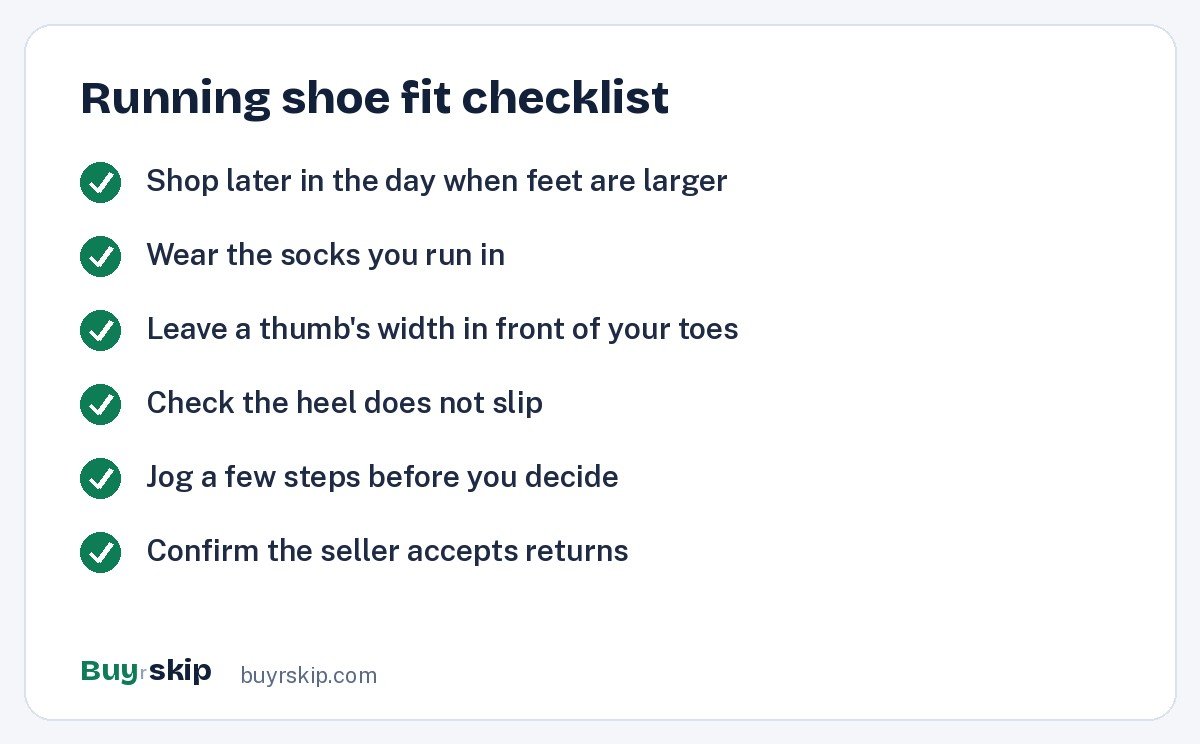
Fit matters more than any feature. Your heel should feel secure without slipping, the midfoot should be snug but not tight, and you should have roughly a thumb’s width of space in front of your longest toe, because feet swell during runs. Try shoes on later in the day, wear your running socks and check whether a wide size is offered if standard widths feel cramped. The Nimbus has a roomy toe box, which helps if you need extra space up front.
Sizing can vary between brands, so do not assume your usual size carries over. Buying from a seller with easy returns removes most of the risk of ordering online.
Neutral or stability
All three shoes here are neutral trainers, meaning they do not include dedicated features to limit how much your foot rolls inward. Most runners do fine in neutral shoes. If you have been told you overpronate significantly, or you get recurring pain on the inside of your knees or arches, ask a running store or physical therapist whether a stability shoe would help.
Weight and how you run
Lighter shoes feel quicker and livelier, while heavier shoes often bring more cushioning and durability. The Ghost and Nimbus are not the lightest options, and the Clifton is known for being light for its cushioning. If most of your running is easy and steady, weight matters less than comfort. If you plan to race or do speed work, consider a lighter second shoe for those days.
Price and value
All three cost between about $130 and $170, so the price gap is small. Spend based on comfort rather than price, because a shoe that feels right will get used more and help you run consistently.
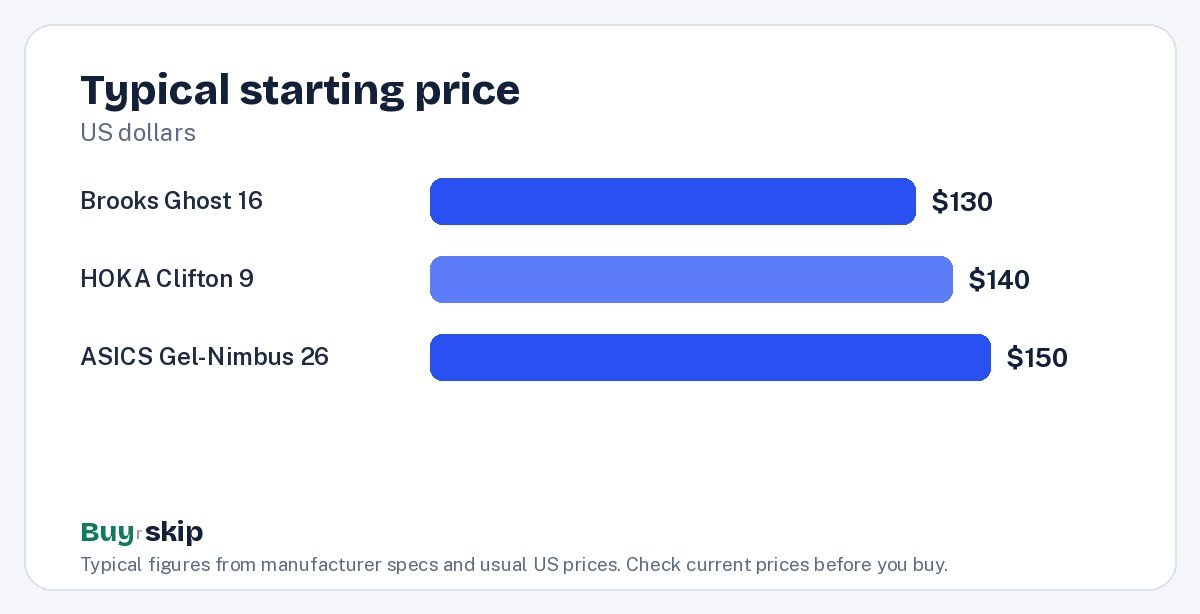
Running shoe lines are usually updated with new versions over time, and when that happens the outgoing version is often sold at a lower price. If one of these models is on sale and fits you well, it remains a good buy.
Building a simple rotation
You do not need more than one pair, but if you run three or more times a week, two pairs can make sense. A common approach is to pair a balanced daily trainer with a softer shoe for long or recovery runs. For example, the Brooks Ghost 16 handles most weekday runs, while the Gel-Nimbus 26 or Clifton 9 takes the long weekend run when your legs want more protection. Alternating also lets each pair dry out fully between runs, which keeps them fresher.
Road, treadmill or trail
All three shoes are road shoes. They work well on pavement, sidewalks, tracks and treadmills, and they are fine on smooth gravel paths. Their outsoles are not designed for mud, loose rock or steep technical trails, where you want deeper lugs and more protection underfoot. If a good share of your running is off-road, look at a trail-specific shoe instead.
When to replace your running shoes
Cushioning breaks down with use, even if the shoe still looks fine. Common signs include a midsole that looks creased or compressed, a tread worn smooth in spots, or new aches after runs that used to feel fine. Many runners track mileage in an app or watch to help decide when to replace them. If you run often, rotating two pairs can also spread the wear.
Frequently asked questions
Which running shoe is best for beginners?
The Brooks Ghost 16 is the best starting point for most beginners. Its balanced cushioning works for easy runs, walk-run intervals and gradually longer distances, and its fit and durability are widely praised by owners. If you want a softer feel or are on your feet all day, the HOKA Clifton 9 is a great alternative. Most important of all, pick a shoe that feels comfortable as soon as you put it on.
Is the HOKA Clifton 9 or Brooks Ghost 16 better?
It depends on the feel you want. The Clifton 9 is softer and lighter with a rocker that smooths your stride, which makes long easy miles comfortable. The Ghost 16 is more balanced, a bit firmer and feels more stable on turns and uneven ground. If you love soft shoes, choose the Clifton. If you want one versatile shoe for everything, choose the Ghost.
Are running shoes good for walking?
Yes. All three of these shoes work well for walking and long days on your feet, and the HOKA Clifton 9 and ASICS Gel-Nimbus 26 are especially popular for their cushioning. Running shoes are built for forward motion, so for courts or lateral sports a dedicated shoe is better. If walking is your main activity, compare these with shoes made specifically for walking.
How long do running shoes last?
There is no fixed number, because lifespan depends on your weight, stride, running surface and the shoe’s design. Many runners replace shoes when the cushioning feels flat or they notice new aches, rather than waiting for the upper to wear out. Tracking your mileage helps you spot when a pair has started to change. Rotating two pairs can also extend how long each one lasts.
Should I buy running shoes online or in a store?
Either works. A running store lets you try several models and jog a few steps, which is helpful for your first pair. Online shopping is convenient and often cheaper, especially for repeat purchases of a model you already know fits. When you buy online, choose a seller with easy returns, and try new shoes indoors first so you can still send them back.
The bottom line
The Brooks Ghost 16 is the best running shoe for most people: comfortable, durable and balanced enough for almost every run. Choose the HOKA Clifton 9 if you want a softer, lighter ride for long easy miles, or the ASICS Gel-Nimbus 26 if maximum comfort matters most and you do not mind a little extra weight. To round out your kit, grab a few pairs of moisture-wicking running socks and a running belt for your phone.
If you run off-road or mostly walk, see our guides to the best trail running shoes and best walking shoes. Check the current price before you order.
Check price on Amazon: Brooks Ghost 16
Paid link. Typical price about $130–$150; check the current price on Amazon.