We research products independently from specs, manufacturer documentation, warranty terms and owner feedback. When you buy through links on this page, we may earn a commission at no extra cost to you. As an Amazon Associate we earn from qualifying purchases.
Quick answer
The Sennheiser HD 800 S is the best audiophile headphone for critical listening at home: a huge, open soundstage, lots of detail and a comfortable fit, for about $1,500–$1,800, as long as you pair it with a good amp. If you want more punch and an easier load to drive, the Focal Clear MG is the better match. Need isolation? The closed-back Sony MDR-Z1R is the one to consider.
Choosing among the best audiophile headphones is less about finding the “best sound” and more about matching a sound and design to how and where you listen. At this level, all three picks are excellent; the differences come down to open versus closed design, how much amplification they need, how they present music, and how they feel after a few hours. Our picks are based on specs, manufacturer documentation, warranty terms, independent review consensus and owner-feedback patterns.
These are home headphones. None of them is built for the commute, and two of them leak sound by design. If you need noise cancelling for travel, that is a different category entirely, and our best noise-cancelling headphones list is the better place to start.
Quick picks
| Product | Best for | Our verdict | Typical price |
|---|---|---|---|
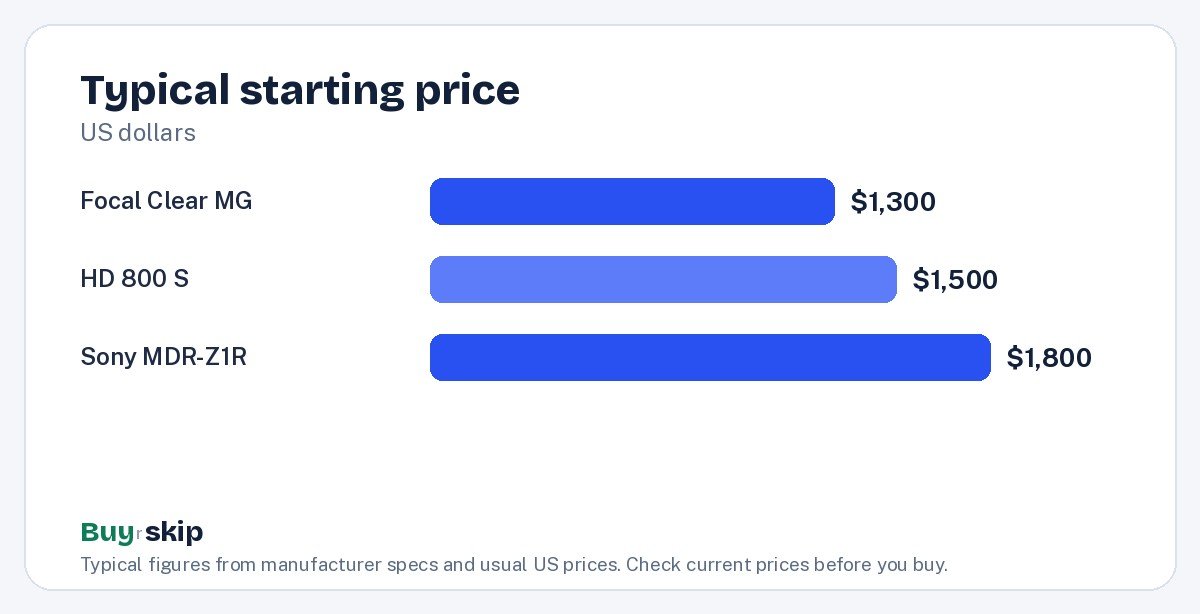
| Sennheiser HD 800 S | Critical listening | Buy | about $1,500–$1,800 |
| Focal Clear MG | Punchy, engaging sound | Buy | about $1,300–$1,600 |
| Sony MDR-Z1R | Closed-back luxury | Consider | about $1,800–$2,200 |
Prices at this level vary by retailer and bundle, so check the current price before you buy.
The best audiophile headphones in 2026
Best overall Our verdict: Buy
Sennheiser HD 800 S
Typical price: about $1,500–$1,800
Critical listening. Buy it if you want a reference open-back headphone with a huge soundstage.
- Pros
- ✓ Huge soundstage
- ✓ Very detailed
- ✓ Comfortable
- Cons
- ✕ Needs a good amp
- ✕ Open-back leaks sound
Check price on Amazon Paid link
The Sennheiser HD 800 S is the reference pick for people who sit down to listen. Its signature is a wide, open soundstage: instruments sound spread out around you rather than packed inside your head, which makes it especially rewarding with orchestral, jazz, live and well-recorded acoustic music. It is also very detailed, so you hear small things in a mix, such as room ambience, the decay of a note or a quiet backing part, that cheaper headphones tend to blur.
Comfort is a strength. Owners consistently describe it as comfortable for long sessions, which matters when the whole point is to listen for an hour or more at a time.
There are two real trade-offs. First, it needs a good amp. Plugging it straight into a phone or laptop headphone jack will not get the best from it, so budget for a capable headphone amplifier if you do not have one. Second, it is open-back, so it leaks sound and lets outside noise in. That makes it a poor choice for shared rooms, offices or travel. Skip it if you want to use your headphones on the go. Buy it if you have a quiet room, a decent amp and want the most spacious, revealing listen of the three.
Best for punchy sound Our verdict: Buy
Focal Clear MG
Typical price: about $1,300–$1,600
Punchy, engaging sound. Buy it if you want detail with punch and dynamics.
- Pros
- ✓ Dynamic, engaging sound
- ✓ Premium build
- ✓ Easy to drive
- Cons
- ✕ Open-back
- ✕ Pricey
Check price on Amazon Paid link
The Focal Clear MG is the pick for listeners who want detail with energy. Built around magnesium drivers, it has a dynamic, engaging sound with real punch, so rock, electronic and pop hit harder than they do on the more spacious, analytical HD 800 S. It still has plenty of detail, but its character is more lively and less laid back.
A big practical plus is that it is easy to drive. You still benefit from a good source, but it is less demanding about amplification than the Sennheiser, which makes it simpler to set up and a little more forgiving if you are building a system from scratch. The build feels premium, which you would expect at about $1,300–$1,600.
Like the Sennheiser, it is open-back, so it leaks sound and offers no isolation. It is also expensive, even if it costs a little less than the other two here. Skip it if you need isolation; the Sony MDR-Z1R is the closed-back option. Buy it if you want flagship detail with more punch and an easier time with amplification.
Best closed-back Our verdict: Consider
Sony MDR-Z1R
Typical price: about $1,800–$2,200
Closed-back luxury. Buy it if you want closed-back isolation with a rich, smooth sound.
- Pros
- ✓ Closed-back isolation
- ✓ Rich bass
- ✓ Comfortable
- Cons
- ✕ Heavy
- ✕ Expensive
Check price on Amazon Paid link
The Sony MDR-Z1R answers a problem the other two cannot: it is closed-back. That means it isolates you from your surroundings and keeps your music to yourself, so you can listen late at night next to a sleeping partner, in a shared apartment or in a home office without disturbing anyone. Its sound is rich and smooth, with satisfying bass, and owners find it comfortable.
That isolation comes with typical closed-back trade-offs. It cannot match the wide, open soundstage of the Sennheiser HD 800 S, and listeners who want the most airy, spacious presentation will notice. It is also heavy, which some people feel on long sessions, and it is the most expensive pick here at about $1,800–$2,200.
Skip it if you want the widest soundstage or the best value. Consider it if you need isolation or prefer a richer, warmer sound and are happy to pay a premium for a closed-back flagship.
How to choose audiophile headphones
Open-back or closed-back
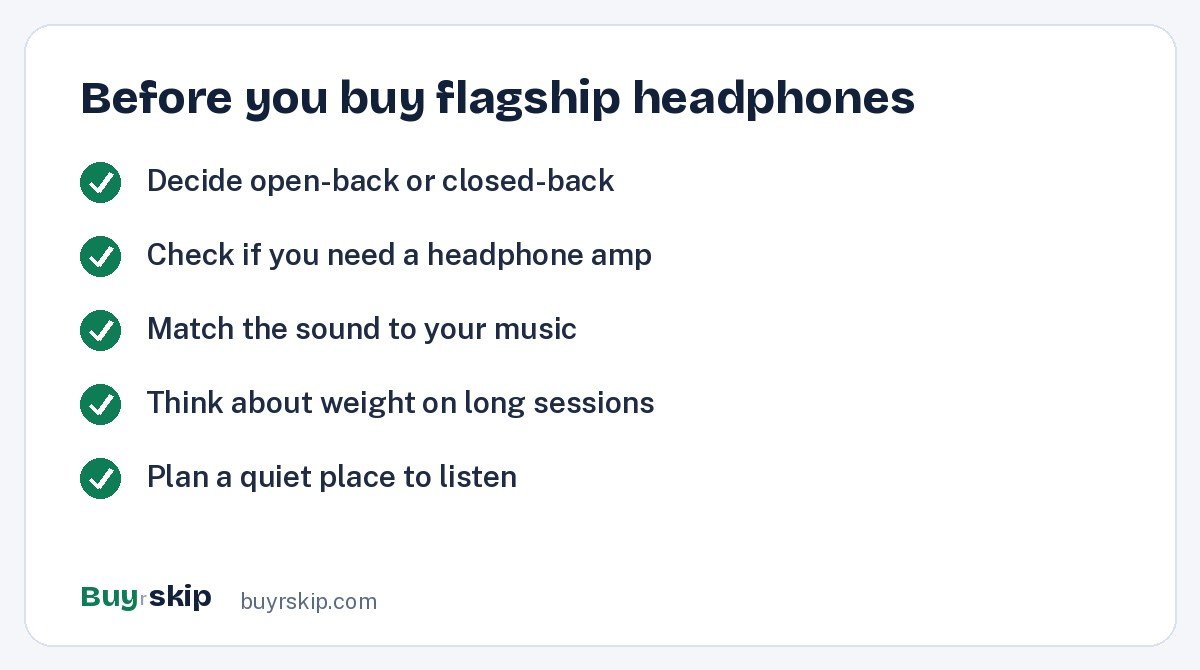
This is the first and biggest decision. Open-back headphones, like the Sennheiser HD 800 S and Focal Clear MG, let air and sound pass through the earcups. That helps them sound spacious and natural, but they leak sound and block very little outside noise. Closed-back headphones, like the Sony MDR-Z1R, seal around your ears for isolation and privacy, at the cost of some openness. If anyone else shares your listening space, closed-back is usually the right call.
Amplification and your source
High-end headphones vary in how much power they need. The HD 800 S needs a good amp to sound its best, while the Clear MG is easy to drive. If you plan to listen from a laptop or phone, factor in a dedicated amp or DAC/amp combo. A desktop headphone amp and DAC is a common pairing, and the right one depends on the headphone you choose. Spending everything on headphones and nothing on the source is the most common mistake at this level.
Sound character
Think about what you listen to. If you love orchestral, jazz and acoustic recordings and want to hear the space around the performers, the Sennheiser HD 800 S is the natural fit. If you want punch and energy for rock, pop and electronic music, choose the Focal Clear MG. If you like a richer, warmer sound with satisfying bass, the Sony MDR-Z1R is the one.
Budget for the whole setup
At this price, the headphone is only part of the bill. The real cost of the Sennheiser HD 800 S includes a capable amp, and that can add meaningfully to the total. The Focal Clear MG is easier to drive, so you can often start with a simpler setup and upgrade later. The Sony MDR-Z1R costs the most up front. A sensible rule: if your total budget is fixed, choose the headphone that leaves room for a good source rather than the most expensive headphone you can just afford. Also look at the warranty terms from the manufacturer or authorized retailer, since a flagship headphone is a long-term purchase and you want support if a driver or cable fails.
Comfort and weight
You will wear these for long sessions, so comfort matters as much as sound. The HD 800 S and MDR-Z1R are both described as comfortable, but the Sony is heavy, which some listeners notice after an hour or two. If you are sensitive to clamp or weight, read owner feedback on fit for your head size before you buy.
Where you will listen
Be realistic about your space. A quiet room of your own is ideal for open-back headphones. A shared living room, a bedroom with a partner or a home office with calls points toward closed-back. None of these three is a portable headphone, so if you need something for the train or plane, look at the noise-cancelling headphones buying guide instead.
Care and storage
Flagship headphones last a long time when they are stored well. A headphone stand keeps them off the desk, protects the headband and earpads, and keeps the cable tidy. Keep open-back headphones away from dust, and replace earpads when they flatten, since worn pads can change both comfort and sound.
Frequently asked questions
Do audiophile headphones need an amplifier?
Many do, though it varies. The Sennheiser HD 800 S needs a good amp to sound its best, so plan for one. The Focal Clear MG is easy to drive and is more forgiving of the source, though it still benefits from quality equipment. If you only listen from a phone or laptop jack, budget for a headphone amp or DAC/amp combo with your purchase.
What is the difference between open-back and closed-back headphones?
Open-back headphones let sound pass through the earcups, which gives a more spacious, natural presentation but leaks sound and blocks little outside noise. Closed-back headphones seal around your ears for isolation and privacy, usually with a less open soundstage. The HD 800 S and Clear MG are open-back; the Sony MDR-Z1R is closed-back.
Can I use audiophile headphones on the go?
Not really. These three are designed for home listening. The open-back Sennheiser and Focal leak sound and let in outside noise, which makes them unsuitable for public spaces. The closed-back Sony isolates better but is heavy and expensive to carry around. For travel or commuting, noise-cancelling headphones are a far better fit.
Which is better for bass, the Focal Clear MG or the Sony MDR-Z1R?
They deliver bass differently. The Focal Clear MG has a dynamic, punchy sound that gives music impact. The Sony MDR-Z1R has rich, smooth bass with a fuller, warmer character. If you want energy and slam, lean toward the Focal. If you want warmth and isolation, lean toward the Sony.
Are these headphones worth the price?
They are worth it if you listen attentively at home and have a good source to match. All three deliver a level of detail, comfort and build that cheaper headphones rarely reach. If you mostly listen casually, on the move or through a phone without an amp, you will not hear enough of the difference to justify spending more than $1,000.
What music files should I use with high-end headphones?
Use the best source you have. Lossless files or a lossless streaming tier give these headphones the most information to work with, and detailed models like the HD 800 S can make poor recordings and low-bitrate files sound thin. You do not need special hardware to start, but a good DAC and amp, plus lossless audio, will show off what you paid for.
The bottom line
Buy the Sennheiser HD 800 S if you want a reference open-back headphone with a huge soundstage and you have, or will buy, a good amp. If you prefer punch and energy, or want something easier to drive, the Focal Clear MG is the better match and usually costs a little less.
The Sony MDR-Z1R is worth considering when isolation matters most, or when you want a richer, warmer sound and can accept extra weight and a higher price. Check current prices and plan your amp budget before you buy.
Check price on Amazon: Sennheiser HD 800 S
Paid link. Typical price about $1,500–$1,800; check the current price on Amazon.