We research products independently from specs, manufacturer documentation, warranty terms and owner feedback. When you buy through links on this page, we may earn a commission at no extra cost to you. As an Amazon Associate we earn from qualifying purchases.
Quick answer
Quick answer: The Ruffwear Front Range Harness is the best dog harness for most dogs, with comfortable padding, front and back leash clips and durable build for everyday walks and hikes, at about $45–$50. If your dog pulls and you want to spend less, the PetSafe Easy Walk Harness is a simple front-clip option, and the rabbitgoo No-Pull Dog Harness is the best value padded pick.
The best dog harnesses spread pressure across your dog’s chest instead of their neck, give you better control, and stay comfortable for the length of your walks. The right one depends on what you need most: comfort for long outings, help with pulling, a low price, or a way to secure your dog in the car. This guide covers four popular harnesses, one for each of those jobs. Our picks are based on published product details, manufacturer documentation, warranty terms, independent review consensus and patterns in owner feedback, not on in-house trials.
Quick picks
| Product | Best for | Our verdict | Typical price |
|---|---|---|---|
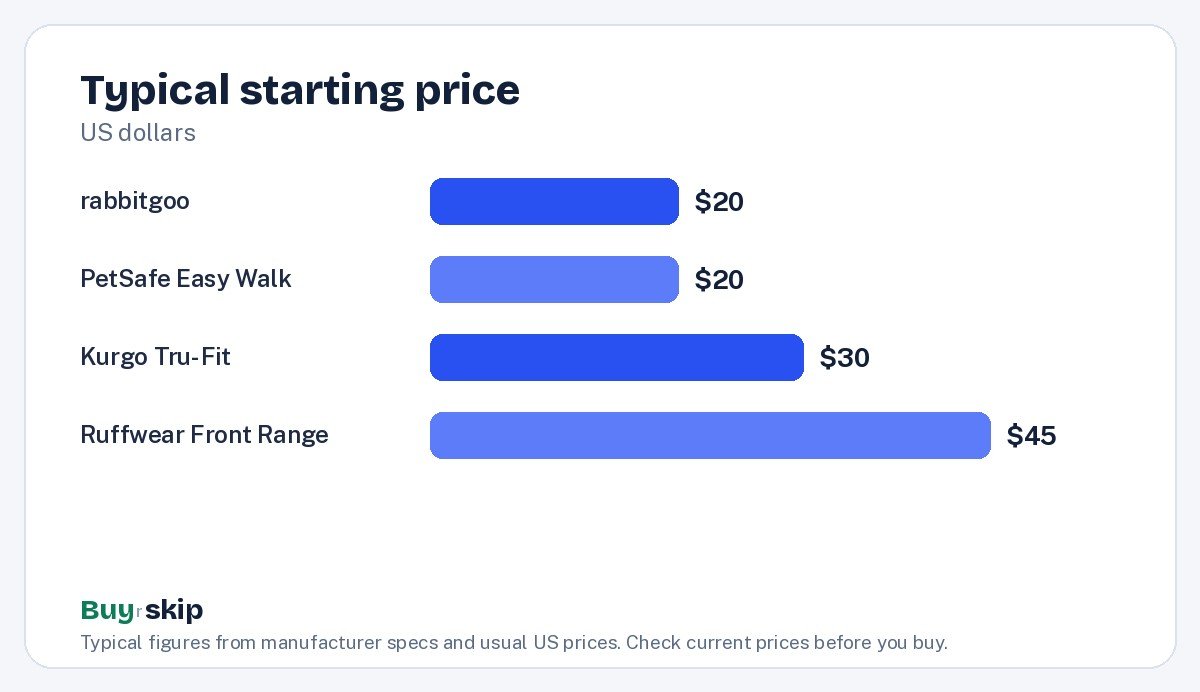
| Ruffwear Front Range Harness | Everyday walks and hikes | Buy | about $45–$50 |
| PetSafe Easy Walk Harness | Pullers | Buy | about $20–$30 |
| rabbitgoo No-Pull Dog Harness | Best value | Buy | about $20–$25 |
| Kurgo Tru-Fit Smart Harness | Car travel | Consider | about $30–$45 |
Prices vary by size and change often, so check the current price before you buy.
The best dog harnesses in 2026
Best overall Our verdict: Buy
Ruffwear Front Range Harness
Typical price: about $45–$50
Everyday walks and hikes. Buy it if you want a comfortable, durable everyday harness.
- Pros
- ✓ Comfortable padding
- ✓ Front and back clips
- ✓ Durable
- Cons
- ✕ Pricier
Check price on Amazon Paid link
The Ruffwear Front Range is the everyday harness we would recommend to most dog owners. It has comfortable padding across the chest and belly, so it works for short neighborhood loops and longer hikes alike. It also has two leash points: a back clip for relaxed walking and a front clip on the chest that gives you more steering control if your dog starts to pull. That flexibility means one harness can cover most situations.
Ruffwear is known for outdoor dog gear, and the Front Range has a reputation for being durable, which matters if you walk every day or spend weekends on trails. It is easy to put on, and the adjustable straps help you dial in a snug fit.
The trade-off is price. At about $45–$50, it costs roughly twice as much as the budget picks. Skip it if you just need the cheapest functional harness; the rabbitgoo gives you padding and a no-pull clip for less. If pulling is your main problem and comfort on long hikes is not, the PetSafe Easy Walk is another lower-cost option.
Best for pullers Our verdict: Buy
PetSafe Easy Walk Harness
Typical price: about $20–$30
Pullers. Buy it if your dog pulls and you want a simple front-clip harness.
- Pros
- ✓ Helps reduce pulling
- ✓ Easy to fit
- ✓ Cheap
- Cons
- ✕ Can rub if poorly fitted
Check price on Amazon Paid link
The PetSafe Easy Walk is built around one idea: the leash attaches at the front of the chest. When a dog pulls against a front clip, the harness gently turns them sideways and back toward you, which makes pulling less rewarding. It is a widely used training tool, and many owners find it helps reduce pulling, especially combined with consistent training.
It is easy to fit, quick to put on, and typically costs about $20–$30, so it is an affordable first step for a dog that drags you down the street.
The trade-off is comfort and fit. The design has thin straps without much padding, and it can rub if it is not fitted well, particularly behind the front legs. Check the fit carefully and adjust it as your dog moves. Skip it if you want padding for long hikes; the Ruffwear Front Range has a front clip too, with much more cushioning.
Best value Our verdict: Buy
rabbitgoo No-Pull Dog Harness
Typical price: about $20–$25
Best value. Buy it if you want a padded no-pull harness for little money.
- Pros
- ✓ Great value
- ✓ Padded
- ✓ Handle on top
- Cons
- ✕ Sizing runs small for some breeds
Check price on Amazon Paid link
The rabbitgoo No-Pull is the budget pick for owners who want padding and no-pull help without spending much. It is padded and adjustable, has a no-pull design, and adds a handle on top, which is handy for helping a dog into the car, holding them close at a crosswalk or steadying them on rough ground. It typically costs about $20–$25.
For everyday walks, that is a lot of harness for the money, which is why it is our value pick. It suits owners of young dogs who will outgrow harnesses, multi-dog homes, or anyone who wants a spare.
The trade-offs: it does not have premium materials, and sizing runs small for some breeds, so check the size chart closely and measure your dog’s chest girth before ordering. Consider sizing up if your dog is between sizes or has a deep chest. Skip it if you want premium build and long-term durability; the Ruffwear Front Range is the better buy.
Best for car travel Our verdict: Consider
Kurgo Tru-Fit Smart Harness
Typical price: about $30–$45
Car travel. Buy it if you want a harness that works with a car seat belt tether.
- Pros
- ✓ Car tether included
- ✓ Steel buckles
- ✓ Adjustable
- Cons
- ✕ Bulkier
Check price on Amazon Paid link
The Kurgo Tru-Fit Smart Harness is designed for dogs that ride in the car often. It works with a seat belt tether, which is included, so you can keep your dog secured in the back seat rather than roaming the car or climbing into the front. It has steel buckles and adjustable straps, and it doubles as a walking harness when you reach your destination.
It typically costs about $30–$45. That makes it a sensible choice for road trips, regular vet or park drives, and anyone who wants a single harness for the car and the walk.
The trade-off is bulk. It is bulkier than the other picks, which can feel like more harness than you need for quick neighborhood walks. Consider it if car travel is a regular part of your dog’s life. Skip it if you only walk around town; the Ruffwear Front Range or PetSafe Easy Walk suits that better.
How to choose dog harnesses
Front clip, back clip or both
Where the leash attaches changes how a harness behaves. A back clip is comfortable and easy for dogs that already walk nicely. A front clip helps redirect pullers. Having both, like the Ruffwear Front Range, lets you switch depending on the day. If your dog pulls hard and you want the simplest fix, buy the PetSafe Easy Walk. If your dog walks well and you want comfort, a back clip is fine.
Fit is everything
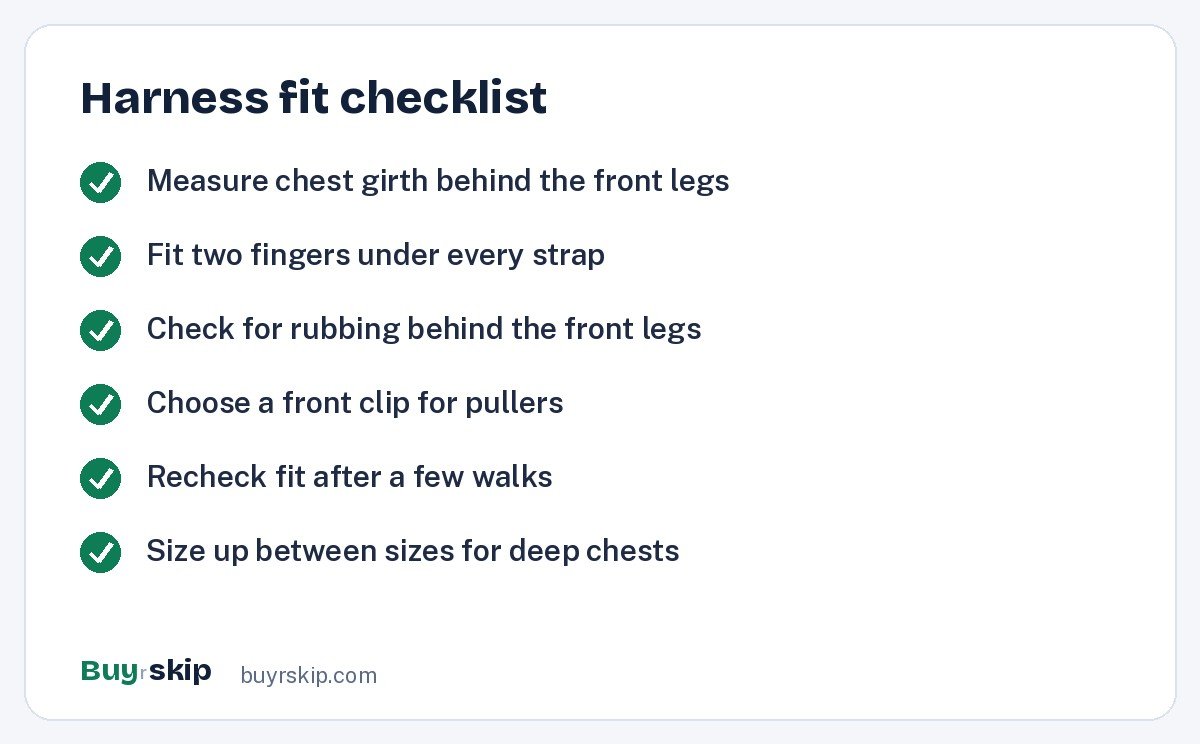
A poorly fitted harness rubs, slips or lets a dog back out of it. Measure your dog’s chest girth at the widest point, just behind the front legs, and compare it with the brand’s size chart. Once on, you should be able to slide two fingers under each strap, but no more. Watch for rubbing behind the front legs during the first few walks, and readjust as needed, since straps can loosen.
Padding and comfort
Padding matters more the longer you walk. For daily walks and hikes, a padded harness like the Ruffwear Front Range or the rabbitgoo No-Pull is more comfortable. For short training walks, a lighter strap-style harness is fine. Dogs with thin coats or sensitive skin especially benefit from padding.
Car safety
Letting a dog roam the car is distracting and risky for everyone in a sudden stop. A harness that attaches to a seat belt tether, like the Kurgo Tru-Fit Smart, keeps your dog in place in the back seat. Never attach a car tether to a collar. If you use a crate in the car instead, secure the crate so it cannot slide.
Handles and extras
A top handle, like the one on the rabbitgoo, helps you lift or guide your dog over obstacles, into a car or through a crowd. Reflective trim helps on early morning and evening walks. Pair any harness with a sturdy leash; a 6-foot padded leash is a sensible everyday choice, and a clip-on LED light adds visibility after dark.
Getting your dog used to a new harness
Some dogs accept a harness right away. Others freeze, flop over or try to back out. Introduce it slowly: let your dog sniff it, reward calm behavior, then put it on for short periods indoors before your first walk. Step-in and over-the-head designs feel different to dogs, so if yours dislikes having something pulled over their head, pay attention to how each harness goes on. Keep early walks short and positive, and check the fit again after the first few outings, since straps often settle and loosen.
Durability, cleaning and replacement
Harnesses take a beating from mud, water, sun and chewing. Rinse off dirt and salt after messy walks, and follow the care label for washing; most harnesses should air dry rather than go in a hot dryer. Inspect buckles, stitching and leash attachment points regularly. Replace the harness if you see fraying webbing, a cracked buckle or a loose clip, because a failure near traffic is not worth the risk. Puppies will need several sizes as they grow, which is one reason a low-cost option like the rabbitgoo makes sense early on, with a more durable harness like the Ruffwear once your dog reaches adult size.
Harness or collar?
Most dogs do well with a collar for ID tags and a harness for walks. Harnesses keep pressure off the neck and throat, which is especially helpful for small breeds, flat-faced breeds and dogs that pull. Keep the collar on for identification, but clip the leash to the harness.
Frequently asked questions
Do no-pull harnesses actually work?
Front-clip no-pull harnesses like the PetSafe Easy Walk and rabbitgoo No-Pull can make pulling less effective by turning a dog toward you when they lunge. Many owners find they help a lot, but they work best combined with training, such as rewarding a loose leash and stopping when your dog pulls. A harness is a tool, not a full fix.
How do I know what size harness to buy?
Measure your dog’s chest girth at the widest point, just behind the front legs, and check the brand’s size chart. Some harnesses, such as the rabbitgoo, run small for certain breeds, so size up if your dog falls between sizes or has a deep chest. After fitting, you should be able to slide two fingers under each strap.
Is a harness better than a collar for walks?
For most dogs, yes. A harness spreads force across the chest and shoulders instead of the neck, which helps pullers, small breeds and flat-faced breeds in particular. It also gives you more control. Keep a collar on for ID tags, but attach the leash to the harness for walks.
Can I use a walking harness in the car?
Only if it is designed for car use with a seat belt tether or restraint system. The Kurgo Tru-Fit Smart Harness includes a car tether and steel buckles for that purpose. An ordinary walking harness is not designed for car restraint. Never attach a car tether to your dog’s collar.
Is the Ruffwear Front Range worth the extra cost?
For dogs that walk every day or hike on weekends, usually yes. You get more padding, front and back clips, and a reputation for durability, which can mean fewer replacements over time. If your dog only takes short walks around the block, or you are still figuring out sizing for a growing puppy, a budget harness like the rabbitgoo or PetSafe Easy Walk is a sensible place to start.
Can my dog wear a harness all day?
It is generally best to take a harness off when your dog is resting at home. Wearing one for long periods can lead to rubbing or matted fur, and some dogs chew at straps. Put the harness on for walks, car rides and outings, and check your dog’s skin under the straps now and then for redness.
The bottom line
For most dogs, the Ruffwear Front Range Harness is the harness to buy, thanks to its padding, two leash points and durable build. If your dog pulls and you want to spend less, choose the PetSafe Easy Walk Harness, and if you want padding on a budget, the rabbitgoo No-Pull Dog Harness is excellent value. Dogs that ride in the car often are well served by the Kurgo Tru-Fit Smart.
Rounding out your dog’s gear? See our picks for the best dog beds and the best pet cameras and pet tech.
Check price on Amazon: Ruffwear Front Range Harness
Paid link. Typical price about $45–$50; check the current price on Amazon.