We research products independently from specs, manufacturer documentation, warranty terms and owner feedback. When you buy through links on this page, we may earn a commission at no extra cost to you. As an Amazon Associate we earn from qualifying purchases.
Quick answer
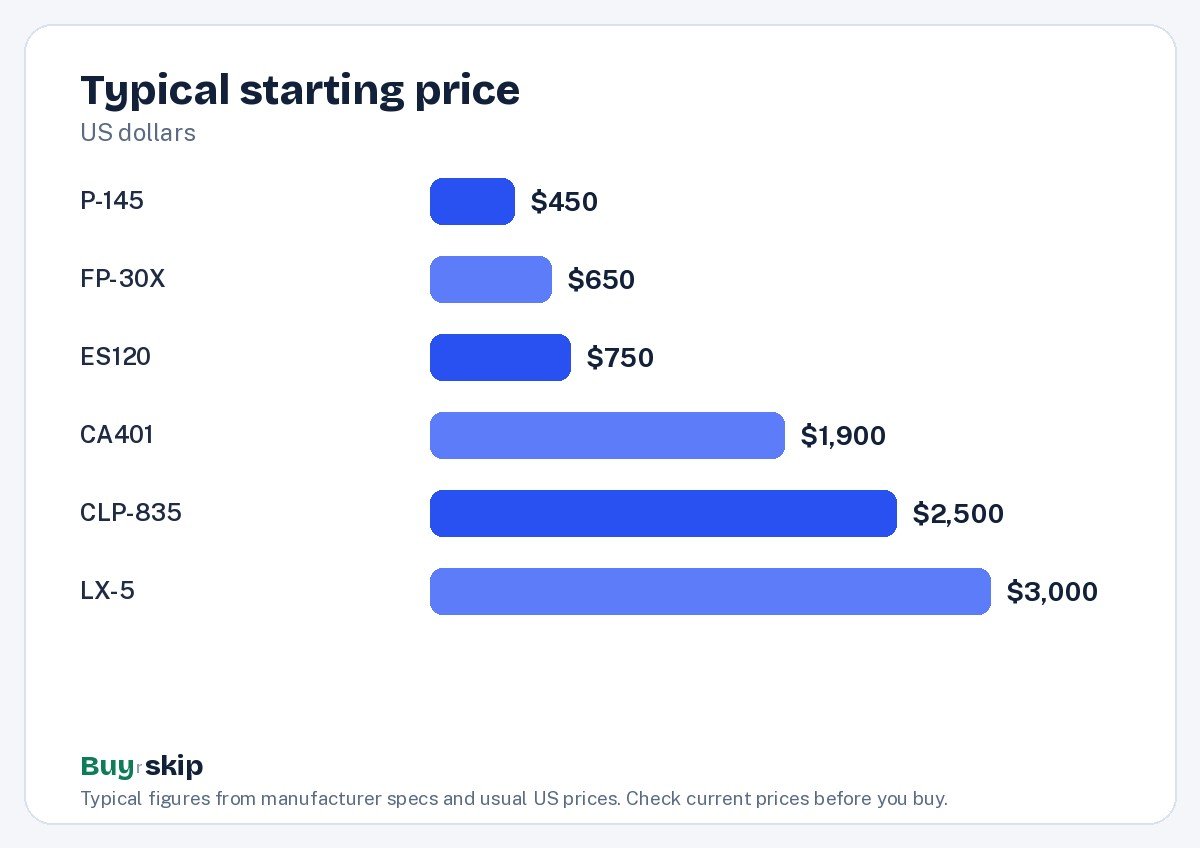
The Yamaha Clavinova CLP-835 is the best digital piano for serious practice at home: realistic key action, Yamaha’s CFX grand piano samples and cabinet speakers, for about $2,500–$3,200. If you want a portable piano that still feels and sounds great, the Roland FP-30X is the best value at about $650–$750. For a quality first piano on a budget, get the Yamaha P-145 at about $450–$550.
The best digital pianos get two things right: the feel of the keys and the sound of the piano voice. Extra voices, rhythms and screens matter far less than whether the action responds like real hammers and whether the tone stays pleasant through hours of practice. This guide ranks six models, from portable slab pianos you can move around the house to furniture-style cabinet pianos meant to replace an acoustic upright. Our picks are based on manufacturer specs and documentation, warranty terms, independent review consensus and the patterns that show up in owner feedback.
Quick picks
| Product | Best for | Our verdict | Typical price |
|---|---|---|---|
| Yamaha Clavinova CLP-835 | Home piano feel | Buy | about $2,500–$3,200 |
| Roland FP-30X | Learners and players | Buy | about $650–$750 |
| Roland LX-5 Digital Piano | Expressive playing | Buy | about $3,000–$3,800 |
| Kawai ES120 | Serious students | Buy | about $750–$850 |
| Kawai CA401 Digital Piano | Best action for the price | Buy | about $1,900–$2,400 |
| Yamaha P-145 | Beginners | Buy | about $450–$550 |
Piano prices vary with finish, bundles and included stands or benches, so check the current price for the exact package you want.
The best digital pianos in 2026
Best overall Our verdict: Buy
Yamaha Clavinova CLP-835
Typical price: about $2,500–$3,200
Home piano feel. Buy it if you want an acoustic-like piano for serious practice at home.
- Pros
- ✓ Realistic key action
- ✓ Beautiful CFX samples
- ✓ Cabinet speakers
- Cons
- ✕ Heavy
- ✕ Expensive
Check price on Amazon Paid link
The Yamaha Clavinova CLP-835 is the digital piano to buy if you want something close to an acoustic piano in your living room. Its key action is designed to feel like a grand, and its sound is built on Yamaha’s CFX concert grand samples, which owners and reviewers consistently describe as rich and natural. Cabinet speakers fill a room the way a portable piano’s small built-in speakers cannot, so practicing without headphones feels more like playing a real instrument.
Yamaha’s Clavinova line has a long history in homes, schools and practice rooms, and the CLP-835 sits in the middle of that range, where you get much of the premium feel without paying for every top-tier feature. It suits serious adult players, families with children taking lessons who plan to stick with it, and anyone who wants a long-term home instrument without the tuning and space demands of an acoustic.
The trade-offs are weight and price. Delivery and setup take planning, and you may want help carrying it inside. It is a heavy piece of furniture that is not meant to move often, and at about $2,500–$3,200, it is a major purchase. Skip it if you need something portable. The Roland FP-30X or Kawai ES120 can move between rooms or go to a gig, and either costs a fraction of the price.
Best value Our verdict: Buy
Roland FP-30X
Typical price: about $650–$750
Learners and players. Buy it if you want a portable piano that feels and sounds great.
- Pros
- ✓ Great key action
- ✓ Rich sound
- ✓ Bluetooth audio and MIDI
- Cons
- ✕ Stand sold separately
Check price on Amazon Paid link
The Roland FP-30X is the best all-round portable digital piano for the money. Its key action is excellent for the price, and its piano sound is rich and full, which is why it is popular with both learners and returning players. It includes Bluetooth audio, so you can play songs from your phone through its speakers, and Bluetooth MIDI for connecting to piano lesson apps and music software without extra cables.
It suits beginners who want an instrument they will not outgrow quickly, intermediate players, and anyone shopping for a high-quality gift. It is also light enough to move to another room or take to a rehearsal. Owner feedback often mentions that it feels like a bigger step up from entry-level keyboards than the price gap suggests, which is why it is a common recommendation from teachers.
It is also a sensible middle ground for households where a teen and a parent both play, since it suits classical lessons and casual pop playing alike. The main trade-off is the stand. It is sold separately, and you will want a matching stand and pedal unit for a stable, piano-like setup, which raises the total cost. Skip it if you want the lowest price; the Yamaha P-145 costs less and still has weighted keys.
Best premium Our verdict: Buy
Roland LX-5 Digital Piano
Typical price: about $3,000–$3,800
Expressive playing. Buy it if you want expressive modelling sound and premium action.
- Pros
- ✓ Expressive modelling
- ✓ Excellent action
- ✓ Powerful speakers
- Cons
- ✕ Very expensive
Check price on Amazon Paid link
The Roland LX-5 Digital Piano is for players who care most about expression. It uses Roland’s modelling sound, which generates piano tone dynamically rather than relying only on fixed recordings, and owners describe it as responsive to subtle changes in touch. Its hybrid grand action is designed to feel like a grand piano’s keys, and powerful speakers give it a big, room-filling sound.
It suits advanced players, adults returning to the piano after years of lessons, and households where the piano is the centerpiece of a room. If you play classical repertoire with a lot of dynamic range, this is the model built for that. The difference between it and cheaper models is most noticeable in quiet playing and pedaling, where the sound responds to small changes in how you touch the keys.
The trade-off is cost. At about $3,000–$3,800, it is very expensive, the most on this list. Skip it if you want the lowest price. The Kawai CA401 Digital Piano gets you wooden-key action for less, and the Yamaha Clavinova CLP-835 is a strong home piano at a lower starting price.
Best for serious students Our verdict: Buy
Kawai ES120
Typical price: about $750–$850
Serious students. Buy it if realistic touch is your top priority.
- Pros
- ✓ Excellent action
- ✓ Beautiful piano tone
- ✓ Bluetooth
- Cons
- ✕ Fewer extra sounds
Check price on Amazon Paid link
The Kawai ES120 puts touch first. Kawai is known for its key actions, and the ES120’s responsive hammer action is the main reason to buy it. Its piano tone is beautiful and natural, and Bluetooth support helps with lesson apps and music software. For a student who practices daily and will eventually move to an acoustic piano, a realistic action builds better technique. It also means fewer surprises when the student plays a teacher’s piano or performs at a recital on an unfamiliar acoustic instrument.
It is a good fit for piano students working through graded lessons, teachers recommending a home instrument, and adults who play mostly classical piano. Like other portables, it can move between rooms.
The trade-off is a smaller set of extra sounds. If you want lots of organs, synths and effects for experimenting, it has fewer than some rivals. For pure piano practice, that rarely matters, and a simpler panel can make it easier for younger students to get started. Skip it if you want lots of extra voices. If touch matters most and you can spend more, the Kawai CA401 Digital Piano upgrades to wooden keys in a cabinet.
Best action for the price Our verdict: Buy
Kawai CA401 Digital Piano
Typical price: about $1,900–$2,400
Best action for the price. Buy it if you want wooden-key action at a lower price.
- Pros
- ✓ Wooden keys
- ✓ Natural tone
- ✓ Good value
- Cons
- ✕ Fewer features
Check price on Amazon Paid link
The Kawai CA401 Digital Piano brings wooden-key action to a lower price than most cabinet pianos that offer it. Wooden keys pivot and feel more like an acoustic piano’s, which many players notice most in fast passages and soft playing. Its tone is natural, and owners and reviewers consistently point to it as good value among cabinet pianos.
It suits students and adult players who want a home piano with a premium feel without paying top-tier prices. Families who want a stable, furniture-style instrument for lessons will find it a solid long-term choice. Compared with a portable on a stand, a cabinet piano also feels steadier under heavy playing, which younger students tend to appreciate.
The trade-off is features. It has fewer extras than some rivals, focusing on the core piano experience. Skip it if you want lots of extra voices; the Yamaha Clavinova CLP-835 or Roland LX-5 Digital Piano offer more, at higher prices. If you are torn between this and a portable, ask whether the piano will stay in one room for years. If it will, the CA401’s cabinet and wooden keys are a meaningful step up from any slab piano.
Best budget Our verdict: Buy
Yamaha P-145
Typical price: about $450–$550
Beginners. Buy it if you want a quality first piano on a budget.
- Pros
- ✓ Weighted keys
- ✓ Natural sound
- ✓ Light
- Cons
- ✕ Basic speakers
Check price on Amazon Paid link
The Yamaha P-145 is the best budget path to a real weighted-key piano. It gives you weighted keys and a natural piano sound for about $450–$550, which is the most important thing to get right in a first instrument. It is also light, so it can sit on a stand in a bedroom, move to a table or go in a closet between uses.
It suits beginners of any age, parents buying a first piano for lessons, and anyone who wants to test whether piano sticks before spending more. It also makes a thoughtful gift for a new learner. It gives a new learner properly weighted keys, which many cheaper keyboards that look similar in photos do not have.
The trade-offs are speakers and connectivity. The speakers are basic, so the sound is thinner than on the FP-30X or a cabinet piano, and it does not have built-in Bluetooth. Skip it if you need built-in Bluetooth for lesson apps; the Roland FP-30X includes Bluetooth audio and MIDI.
How to choose digital pianos
Key action comes first
The action is how the keys feel and respond. A weighted, graded hammer action helps build the finger strength and control needed for acoustic piano. All six pianos here have weighted keys. If touch is your top priority, buy the Kawai ES120 in the portable class or the Kawai CA401 Digital Piano for wooden keys in a cabinet.
Portable or cabinet
Portable pianos are lighter and cheaper, and they can move between rooms. Cabinet pianos look like furniture, have bigger speakers and stay put. If you rent or may move, buy a portable like the Roland FP-30X. If the piano will live in one room for years, a cabinet model such as the Yamaha Clavinova CLP-835 is worth it.
Sound and speakers
Most digital pianos sound good through headphones. The difference shows up through the speakers, where cabinet models and premium portables have more power and fuller bass. If you will mostly play through headphones, a portable with modest speakers is fine. If you will play aloud for family or friends, invest in better speakers. A piano that sounds thin in the room can make practice feel like a chore.
Bluetooth and apps
Bluetooth MIDI lets you connect to lesson apps and music software wirelessly, while Bluetooth audio lets you stream songs through the piano’s speakers. The Roland FP-30X and Kawai ES120 include Bluetooth. The Yamaha P-145 does not have built-in Bluetooth, so plan on a cable if you use apps. If you want to record yourself, our best home studio gear guide covers the next step.
Accessories you will need
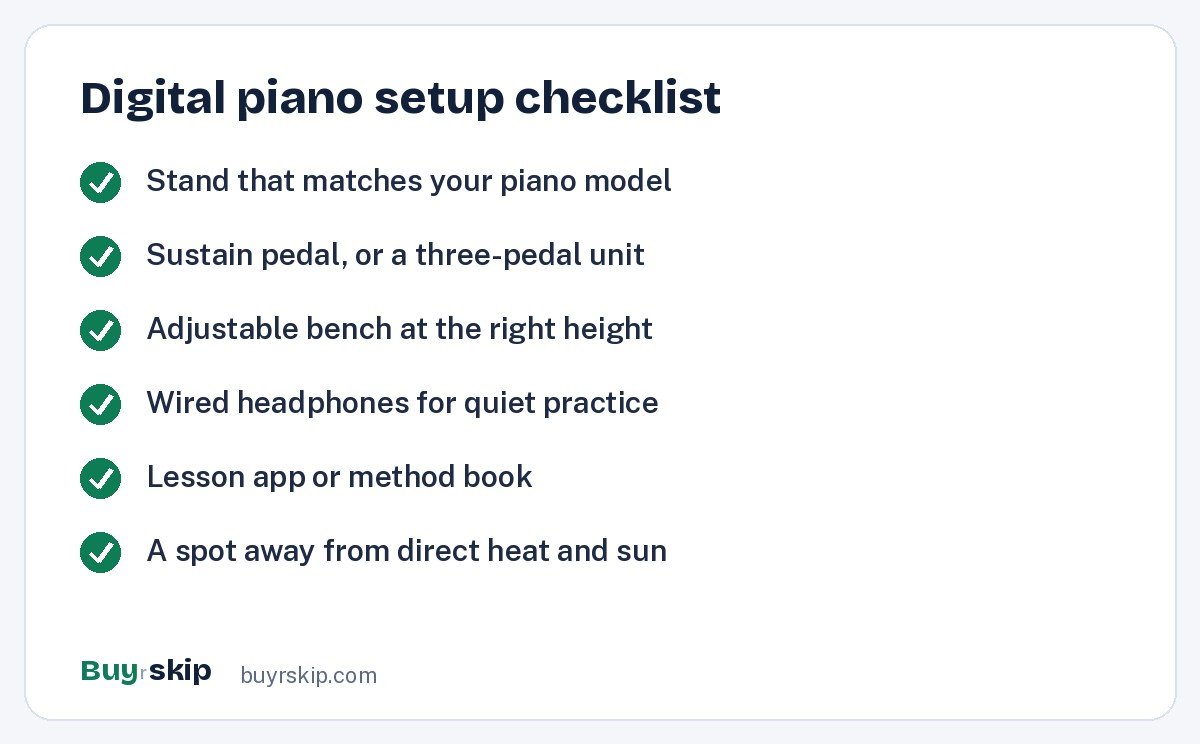
Portable pianos often ship without a matching stand, and a basic sustain pedal may be all that is included. Budget for a sturdy digital piano stand, an adjustable piano bench and good headphones for quiet practice. For headphones, our best noise-cancelling headphones guide is a starting point, though many pianists prefer wired headphones for zero delay.
Space and placement
Measure before you buy. A portable piano needs room for a stand and a bench pulled out behind it, while a cabinet piano needs a wall and floor space similar to a small upright. Keep any piano away from radiators, heating vents and direct sun, which can affect finishes and electronics over time. If the piano will sit in a shared room, think about volume too: a cabinet model’s bigger speakers are lovely for family listening, but headphones keep the peace during early-morning or late-night practice.
Budget by skill level
Beginners do well with the Yamaha P-145 or Roland FP-30X. Students working through lessons benefit from the Kawai ES120’s action. Serious and returning players should look at cabinet pianos. Because a piano can last many years, buying slightly above your current level often saves an upgrade later.
Frequently asked questions
Are weighted keys necessary for beginners?
If the goal is to learn piano rather than casual keyboard, yes. Weighted keys build the finger strength and control needed for acoustic pianos and make expressive playing possible. Every piano on this list has weighted keys, including the budget Yamaha P-145, so even a first instrument here will not hold a learner back.
Is a digital piano as good as an acoustic?
A good digital piano can come close in feel and sound, and it never needs tuning, takes less space and lets you practice silently with headphones. Premium models like the Yamaha Clavinova CLP-835 and Roland LX-5 are designed to feel like a grand. Many serious players still prefer a fine acoustic, but for home practice a digital piano is a practical choice.
Do I need Bluetooth on a digital piano?
Not strictly, but it is convenient. Bluetooth MIDI connects to lesson apps without cables, and Bluetooth audio lets you play along with songs through the piano’s speakers. If you plan to use apps regularly, the Roland FP-30X or Kawai ES120 is a better fit than the Yamaha P-145.
Portable or cabinet digital piano for a child?
If lessons are just starting, a portable like the Yamaha P-145 or Roland FP-30X keeps costs down and can move with the family. Once a child commits to lessons, a cabinet piano such as the Kawai CA401 adds a more stable feel and better speakers. A proper stand and adjustable bench matter either way.
How long does a digital piano last?
A well-made digital piano can serve for many years of regular practice. Unlike an acoustic, it does not need tuning, though keys, pedals and electronics can wear with heavy use. Buying from an established brand such as Yamaha, Roland or Kawai, and checking the warranty terms, gives you better odds of parts and support down the road.
What else should I buy with a digital piano?
At minimum, a stable stand if one is not included, an adjustable bench and headphones. A better pedal or three-pedal unit helps for more advanced pieces. Cabinet pianos usually include the stand and pedals, so their price often covers more than a portable’s sticker price does.
The bottom line
The Yamaha Clavinova CLP-835 is the best digital piano for serious home practice, with realistic action, CFX samples and cabinet speakers. The Roland FP-30X is the best value for most learners, and the Yamaha P-145 is the budget pick that still gets the most important part, weighted keys, right.
Prioritize the key action, choose portable or cabinet based on your space, and check current prices for the full package, including stand and bench. A piano that feels good to play is one that gets played, so put your money into the keys first and the extras second.
Check price on Amazon: Yamaha Clavinova CLP-835
Paid link. Typical price about $2,500–$3,200; check the current price on Amazon.