We research products independently from specs, manufacturer documentation, warranty terms and owner feedback. When you buy through links on this page, we may earn a commission at no extra cost to you. As an Amazon Associate we earn from qualifying purchases.
Quick answer
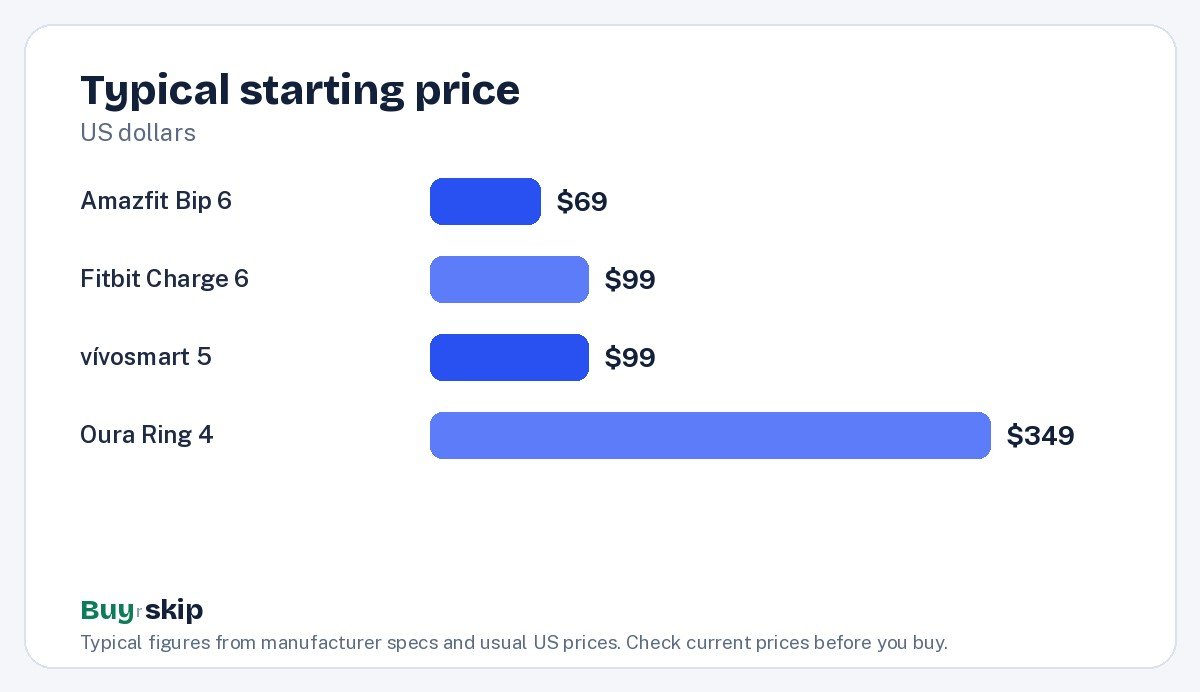
The Fitbit Charge 6 is the fitness tracker most people should buy: it is slim enough to sleep in, has built-in GPS for runs, lasts up to 7 days and works with iPhone and Android, for about $99–$159. On a tight budget, the Amazfit Bip 6 gives you a large AMOLED screen, GPS and up to 14 days of battery for about $69–$89. If you only care about sleep, look at the Oura Ring 4, but budget for its membership.
The best fitness trackers do a few things well and stay out of the way: they count steps, read your heart rate, track sleep without being uncomfortable at night, and log a run or a walk. The real differences between good models are less about the sensors and more about form factor, battery life, whether you get GPS on the device, and whether the best features sit behind a monthly fee. Our picks are based on specs, manufacturer documentation, warranty terms, independent review consensus and owner-feedback patterns.
Quick picks
| Product | Best for | Our verdict | Typical price |
|---|---|---|---|
| Fitbit Charge 6 | Most people | Buy | about $99–$159 |
| Amazfit Bip 6 | Budget pick | Buy | about $69–$89 |
| Oura Ring 4 | Sleep tracking without a band | Consider | about $349–$499 |
| Garmin vívosmart 5 | Garmin fans who want a band | Consider | about $99–$149 |
Prices move often, so check the current price before you buy.
The best fitness trackers in 2026
Best overall Our verdict: Buy
Fitbit Charge 6
Typical price: about $99–$159
Most people. Buy it if you want a slim band that tracks steps, heart rate, sleep and runs with built-in GPS, on iPhone or Android.
- Pros
- ✓ Built-in GPS
- ✓ Comfortable for sleep tracking
- ✓ Up to 7 days of battery
- ✓ Google Wallet and YouTube Music controls
- Cons
- ✕ Some insights need Fitbit Premium
- ✕ Small screen
Check price on Amazon Paid link
The Fitbit Charge 6 is the easy recommendation because it covers almost everything a tracker should do in a band you barely notice. It logs steps, heart rate and sleep, and it has GPS built in, so you can leave your phone at home on a run and still get an accurate route and pace. Battery life is rated at up to 7 days, and the band is water resistant to 50 meters, so swimming and showers are fine.
Small extras make it nicer to live with. Google Wallet lets you pay from your wrist, and you can control YouTube Music without pulling out your phone. It works with both iPhone and Android, which matters if your household is split.
The trade-offs are real but modest. The screen is small, so reading long notifications is fiddly, and some of the deeper insights, such as more detailed sleep and readiness reports, need a Fitbit Premium subscription. Skip it if you want a big screen, third-party apps or the kind of training analysis serious runners get from a full sports watch. For everyone else, it is the most balanced band you can buy.
Best budget Our verdict: Buy
Amazfit Bip 6
Typical price: about $69–$89
Budget pick. Buy it if you want a large AMOLED screen, GPS and two weeks of battery for less than a basic band.
- Pros
- ✓ Very low price
- ✓ Large AMOLED display
- ✓ Long battery life
- Cons
- ✕ App is less polished than Fitbit or Garmin
- ✕ Limited third-party apps
Check price on Amazon Paid link
The Amazfit Bip 6 is the value pick, and it is a strange kind of bargain: it costs less than most basic bands yet gives you more screen and more battery. You get a 1.97-inch AMOLED display, GPS, a 5 ATM water rating and up to 14 days of battery, about twice what the Fitbit is rated for. For someone who hates charging, that alone can decide it.
It tracks steps and sleep and logs GPS workouts, which covers what most people use a tracker for. The large screen is easier to read at a glance than a slim band’s.
Where it falls short is software. Owner feedback consistently says the Zepp app is less polished than Fitbit’s or Garmin’s, and there is only a small selection of third-party apps. Contactless payments are also not something you should count on everywhere. Skip it if you want the most refined app experience or wallet payments that just work. Buy it if you want long battery and a big screen for under $90.
Best for sleep Our verdict: Consider
Oura Ring 4
Typical price: about $349–$499
Sleep tracking without a band. Buy it if you care most about sleep and recovery data and do not want to wear anything on your wrist.
- Pros
- ✓ Very comfortable to sleep in
- ✓ Strong sleep and recovery insights
- ✓ Up to 8 days of battery
- Cons
- ✕ Membership costs about $6 a month
- ✕ No screen, limited workout tracking
Check price on Amazon Paid link
The Oura Ring 4 is a different idea: a titanium ring that tracks sleep, recovery and general health without anything on your wrist. Because it is so comfortable to wear in bed, many people find they actually keep it on every night, which is the point of sleep tracking. Battery is rated at up to 8 days.
Its strength is the quality of its sleep and recovery insights, which independent reviews consistently rate highly. If you mostly want to understand how you sleep and how ready you are for the day, it does that more quietly than any band.
There are two catches. First, cost: the ring is about $349–$499, and most of the useful insights need an Oura membership of about $5.99 a month, so the true cost climbs every year. Second, it has no screen and limited workout tracking, so it is a poor choice for runners who want pace and route data. Skip it if you dislike subscriptions or want a training tool. Consider it if sleep is your priority and you will not wear a band to bed.
Best without a subscription Our verdict: Consider
Garmin vívosmart 5
Typical price: about $99–$149
Garmin fans who want a band. Buy it if you prefer Garmin's app and want a slim band for health tracking and steps.
- Pros
- ✓ Garmin Connect app with no subscription
- ✓ Body Battery and stress tracking
- ✓ About a week of battery
- Cons
- ✕ No built-in GPS
- ✕ Small monochrome screen
Check price on Amazon Paid link
The Garmin vívosmart 5 is for people who like Garmin’s app and want a slim band focused on health. It gives you the Garmin Connect app with no subscription, plus Garmin’s Body Battery energy score and stress tracking, and its battery is rated at up to 7 days.
The big limitation is GPS. The vívosmart 5 has no built-in GPS and relies on your phone’s GPS for outdoor activities, so you have to carry your phone on runs to get a route. The small monochrome OLED screen is also basic next to the Amazfit’s color display.
Consider it if you want health data without a monthly fee and already own Garmin gear, or simply prefer Garmin Connect. Skip it if you run or ride without your phone; the Fitbit Charge 6 costs about the same and has GPS on board.
How to choose a fitness tracker
Band, ring or watch-style screen
Start with what you will actually wear. A slim band like the Fitbit Charge 6 is light enough to forget about, day and night. A ring like the Oura Ring 4 is even easier to sleep in but has no screen. A big-screen tracker like the Amazfit Bip 6 is easier to read but feels more like a watch. If you will not wear it to bed, sleep tracking is wasted, so comfort matters more than any feature list.
Built-in GPS or phone GPS
Built-in GPS means the tracker records your route and pace on its own. Connected GPS borrows your phone’s. If you run, ride or hike without your phone, buy the Fitbit Charge 6 or the Amazfit Bip 6. If you always carry your phone anyway, the Garmin vívosmart 5 works fine.
Subscriptions and the real cost
The sticker price is not the whole story. Oura’s membership runs about $5.99 a month, and some Fitbit insights need Fitbit Premium. Garmin Connect has no subscription for the vívosmart’s core features, and Amazfit’s app is free. If you want to pay once and be done, rule out the Oura first.
Battery life
Rated battery runs from about a week for the Fitbit and Garmin bands, to about 8 days for the Oura, to up to 14 days for the Amazfit. Rated figures assume typical use, and GPS workouts drain any tracker faster, so treat these as best cases. If you hate charging, the Amazfit Bip 6 is the easy answer.
Screen and everyday use
A screen is more useful than it sounds. It lets you check the time, glance at your step count, start a workout and read a notification without picking up your phone. The Amazfit Bip 6 has the largest and most readable display here. The Fitbit’s color screen is small but sharp enough for quick checks, and the Garmin’s monochrome screen covers the basics. The Oura has no screen at all, so everything happens in the app. If you like seeing your numbers through the day, rule out the ring.
Health data you will actually use
Every tracker here records heart rate and sleep, but the way each one presents it differs. Garmin leans on its Body Battery energy score and stress tracking, Oura on sleep and recovery scores, and Fitbit on a broad mix of daily activity, sleep and workouts. None of these is a medical device, so treat the numbers as trends rather than diagnoses. The best choice is the app whose daily summary you find easiest to read, because that is the one you will keep opening.
Phone compatibility and payments
All four work with iPhone and Android, but the experience varies. Contactless payments are a nice extra on the Fitbit through Google Wallet. If you want an Apple-style experience with apps and payments on your wrist, a smartwatch may suit you better; our guide on how to compare smartwatches covers that jump, and our list of the best smartwatches has the full picks.
Bands wear out, and a spare is cheap. If you pick a Fitbit, a replacement Fitbit Charge 6 band in a breathable material can make sleep tracking more comfortable. A spare charging cable for your desk or travel bag also saves headaches, since these use proprietary chargers.
Frequently asked questions
Which fitness tracker has no subscription?
The Garmin vívosmart 5 gives you Garmin Connect with no subscription for its core features, and the Amazfit app is also free. The Fitbit works without a subscription, but some deeper insights need Fitbit Premium. The Oura Ring 4 is the one most tied to a fee: most of its useful insights need an Oura membership of about $5.99 a month.
Is a ring better than a band for sleep tracking?
For many people, yes, simply because a ring is more comfortable to wear all night, and a tracker you take off cannot track anything. The Oura Ring 4 has strong sleep and recovery insights. A slim band like the Fitbit Charge 6 is also comfortable for sleep and adds GPS and a screen, so it is the better all-rounder if you also exercise.
Do I need built-in GPS?
Only if you exercise outdoors without your phone. Built-in GPS lets the tracker map your route and pace on its own. The Fitbit Charge 6 and Amazfit Bip 6 have it. The Garmin vívosmart 5 borrows your phone’s GPS, and the Oura Ring 4 is not built for detailed workout tracking at all.
Can I swim with these trackers?
The Fitbit Charge 6 is water resistant to 50 meters, and the Amazfit Bip 6 is rated 5 ATM, so both handle swimming and showers. Check the manufacturer’s guidance for the Garmin and Oura before swimming, and rinse any tracker after salt water or chlorine. Water resistance can weaken over time, so avoid hot tubs and saunas.
Is a fitness tracker or a smartwatch better?
A tracker is lighter, cheaper and lasts longer per charge. A smartwatch adds apps, bigger screens and richer notifications but usually needs charging more often. If you mainly want health and sleep data, a tracker like the Fitbit Charge 6 is the better buy. If you want your phone on your wrist, look at a smartwatch instead.
The bottom line
Buy the Fitbit Charge 6 if you want one tracker that does everything well: slim, comfortable at night, GPS on board and about a week of battery. If price matters most, the Amazfit Bip 6 gives you a bigger screen and longer battery for less, with a less polished app.
The Oura Ring 4 is worth it only if sleep is your main interest and you accept the membership, and the Garmin vívosmart 5 suits Garmin fans who carry their phone on workouts. Check current prices before you buy, since these trackers go on and off promotion often.
Check price on Amazon: Fitbit Charge 6
Paid link. Typical price about $99–$159; check the current price on Amazon.